
Karate vs. MMA: The Battle of Mindset and Modernity
Why Karate vs. MMA?
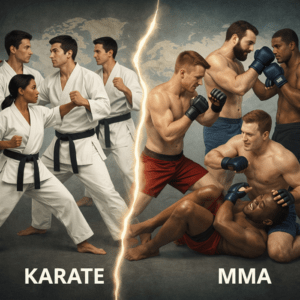
In today’s fast-moving, digitally distracted world, martial arts offer more than physical strength – they unlock focus, resilience, and identity. For Gen Z, the choice between Karate and MMA goes beyond combat styles. Karate represents tradition, mindfulness, and inner growth, while MMA embodies innovation, adaptability, and competitive realism. Together, they highlight two powerful paths for self-discovery in modern life.
Origins
Karate: Emerging in Okinawa, Japan, Karate blended indigenous techniques (Te) with Chinese martial arts. Over centuries, it evolved into distinct styles. Masters like Gichin Funakoshi emphasized Karate not only as a fighting system but as a way of life, embedding respect, humility, and discipline. Its global spread was accelerated through cultural exchange, military presence, and inclusion in schools and federations.
MMA (Mixed Martial Arts): MMA is a modern creation of the late 20th century. Early contests in Brazil (Vale Tudo) and Japan (Shooto) tested martial arts against each other. The UFC’s rise in the 1990s transformed MMA into a mainstream sport, evolving from “no-holds-barred” fights into regulated competitions with weight classes, safety rules, and global broadcasts. Unlike Karate’s cultural heritage, MMA’s origin is pragmatic: to discover the most effective techniques in real combat.
Training Methods
Karate: Training is structured and ritualistic, built on three pillars:
- Kihon: Fundamental techniques that includes stances, strikes, and blocks.
- Kata: Pre-arranged forms encoding timing, balance, and application.
- Kumite: Sparring, ranging from light contact to full knockdown.
Karate emphasizes repetition, precision, and mental discipline, practiced in dojos rich with rituals of respect and etiquette.
MMA: Training is multidisciplinary and dynamic, combining:
- Striking: Boxing and Muay Thai for stand-up combat.
- Grappling: Wrestling and judo for clinch and takedowns.
- Ground fighting: Brazilian jiu-jitsu and sambo for submissions.
MMA athletes undergo strength conditioning, live sparring, and tactical preparation tailored to opponents. Training camps blend sport science with combat realism.
Principles and Philosophy
Karate: Guided by Do (“the way”), Karate cultivates humility, perseverance, and character. The dojo kun (training hall rules) stress values that extend beyond fighting – honesty, restraint, and lifelong discipline.
MMA: MMA’s philosophy is performance-driven. It values adaptability, resilience, and tactical problem-solving under pressure. While sportsmanship exists, the core principle is effectiveness against resisting opponents, prioritizing realism over tradition.
Similarities
- Both demand discipline, consistency, and resilience.
- Both enhance physical fitness, mental toughness, and confidence.
- Both foster community – Karate through dojos and tradition, MMA through gyms and fight teams.
- Both emphasize respect for opponents, expressed through bowing in Karate or glove touches in MMA.
Contrasts
- Tradition vs. Modernity: Karate is steeped in cultural heritage; MMA is a contemporary sport focused on effectiveness.
- Specialization vs. Integration: Karate specializes in striking; MMA integrates multiple disciplines.
- Philosophy vs. Pragmatism: Karate emphasizes character development; MMA emphasizes adaptability and winning.
- Accessibility: Karate is widely accessible to all ages; MMA is more suited to competitive athletes
Research Insights
- Studies show MMA fighters exhibit higher aggression than Oyama Karate practitioners across physical, verbal, anger, and hostility dimensions. Click here for the 2022 publication by Łukasz Rydzik.
- Injury research reveals MMA athletes face a broader range of injuries, while Karate practitioners are more concentrated in strike-related injuries. Click here for the 2017 Journal publication by Andrew R. Jensen & others.
- Both disciplines hold promise for women’s empowerment but remain constrained by male-dominated traditions and stereotypes. Transformative approaches are needed to make these spaces inclusive and supportive. Click here for the publication by Fabiana Turelli and others.
Acceptance Among Gen Z
Karate for Gen Z:
- Appeals to those seeking mindfulness, discipline, and cultural tradition.
- Provides structure in a distracted digital age.
- Welcomes children, teens, and adults alike.
- Aligns with Gen Z’s focus on wellness and holistic growth.
MMA for Gen Z:
- Resonates with competitive realism and global sports culture.
- Offers intense conditioning and practical self-defense.
- Connects with streaming, esports-style competition, and celebrity fighters.
- Embodies adaptability and resilience in a fast-changing world.
Conclusion
Karate and MMA represent two distinct yet complementary paths. Karate offers tradition, discipline, and lifelong growth, while MMA delivers adaptability, competition, and modern athleticism. For Gen Z, Karate nurtures inner focus and character, while MMA builds resilience and real-world readiness. The choice is not binary but reflects personal values, whether seeking cultural tradition, competitive realism, or a blend of both.
Great article! I like how it goes beyond the usual “which is better?” debate and focuses on the different mindsets behind Karate and MMA. Both have unique strengths, and the real value comes from understanding their purpose rather than comparing them as rivals. Well written and thought-provoking.