
Karate: An Add-On Therapy in Rehabilitation
by Dr. Wolfgang Mastnak
Global Health Challenges and the Role of Karate
Worldwide, public health systems face increasing challenges such as mental health and psychosomatic issues. The World Health Organization (WHO) reports that more than a billion people globally live with a mental health condition. Rising healthcare costs further highlight the need for enhanced self-care strategies that strengthen self-management, responsibility, and empowerment.
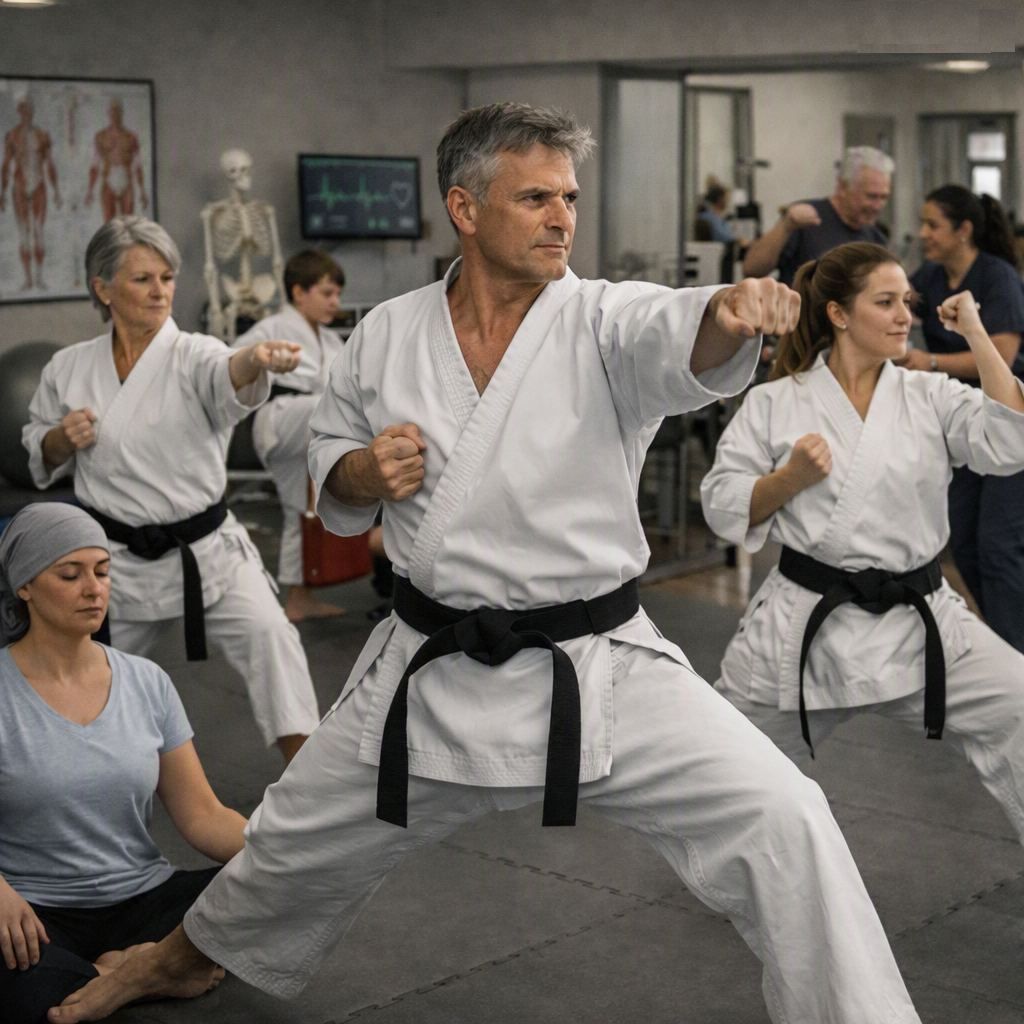
In this context, Karate emerges as a powerful tool to promote comprehensive health and support rehabilitation.
Medical Background of Karate in Rehabilitation
Traditional Martial Arts and Well-Being
Martial arts such as Qigong 气功 and Tai Chi 太极拳 are widely associated with health promotion. However, Karate (空手 or 空手道) offers equally significant potential for physical and mental health, particularly through its diverse Kata sequences.
Historical Roots and Medical Philosophy
Karate originated in 15th-century Okinawa, blending Chinese martial arts with local traditions to form Tōde (唐手) or Okinawa-te (沖縄手). Its philosophy is closely tied to Traditional Japanese medicine (Kampō igaku 漢方医学), which emphasizes energy balance (Ki or Qi). Karate movements aim to restore this balance, influencing vitality and overall well-being.
Integration with Western Medicine
Karate-based rehabilitation should also respect Western medical perspectives, including precision medicine and evidence-based medicine. While research is still emerging, studies highlight benefits such as:
- Improved neurocognitive physiology (Bhattacharya et al., 2022)
- Enhanced metabolic health in overweight adolescents (de Souza et al., 2022)
Medical Fields Where Karate Supports Rehabilitation
Cardiology and Cardiac Rehabilitation
Karate Kata can be individually adjusted and performed at home, making it an effective option for individuals with cardiovascular disease. Regular practice supports coronary health and reduces hypertension.
Oncology and Cancer Recovery
Well-tailored Karate programs are safe and beneficial for cancer patients, reducing fatigue, improving quality of life, and alleviating depression.
Neurorehabilitation for Stroke and Brain Injury
Karate Kata provides a motivating, movement-based intervention for patients recovering from acquired brain injury, complementing physiotherapy.
Gynaecology and Women’s Health
Conditions such as endometriosis, PCOS, and PMS can benefit from regular Kata practice, which reduces pain, enhances flexibility, and improves psycho-affective symptoms.
Mental Health and Emotional Well-Being
Karate helps reduce aggression, improve impulse control, and alleviate depression and anxiety. Structured practice also supports individuals with chronic schizophrenia.
Geriatrics and Healthy Aging
Karate is a promising adjunct in managing Parkinson’s disease and dementia, improving cortical connectivity, alleviating symptoms, and enhancing quality of life in older adults.
The Spiritual Dimension of Karate in Healing
Karate is not only physical but also spiritual. Rooted in Zen Buddhism and the Bushidō code, it emphasizes mindfulness, calmness, and courage. The principle of mushin (無心, “empty mind”) reflects a state of mental purity beyond anger, fear, or obsessive thought.
Karate-based support is never coercive. It is an invitation to balance, strength, and inner calm, offering relief and inner peace to those facing chronic illness or rehabilitation.
Conclusion: Karate as a Holistic Add-On Therapy
Karate bridges Eastern energy medicine and Western science, offering adaptable, individualized pathways to healing. Whether in cardiology, oncology, neurorehabilitation, gynaecology, mental health, or geriatrics, Karate provides a comprehensive therapeutic option.
By integrating physical movement, mental focus, and spiritual mindfulness, Karate stands as a valuable add-on therapy in modern rehabilitation — empowering individuals to heal, grow, and transform.
Excellent article highlighting the therapeutic power of Karate! It’s wonderful to see the sport recognized not just for self-defense, but as a holistic medicine tool capable of aiding everything from cardiac rehab to healthy aging. The adaptability of Karata makes it the perfect empowerment tool for patients navigating rehabilitation.
I think the following you tube channel will be add on to this: https://youtu.be/36wWLvbMRhU?si=m4DZIUc8DaUMV-Jv