
Dr. Gianpiero Greco
Dr. Gianpiero Greco is a Professor and Researcher at the University of Bari, specializing in Exercise and Sport Sciences within the Department of Translational Biomedicine and Neuroscience (DiBraiN). He earned his PhD in Neuroscience and Translational Medicine from the same institution in 2017. His research centres on adapted physical activity, sport, and health promotion across diverse populations, with interdisciplinary expertise spanning Sports Medicine, Sport Psychology, Special Education, and Nutrition & Dietetics. In 2025, Dr. Greco was honoured among the Stanford–Elsevier World’s Top 2% Scientists in Clinical Medicine – Sport Sciences, recognizing his global impact in advancing health through movement and inclusion.
Effects of Shotokan Karate on Adolescent Resilience to Bullying
Summary of the Conference Paper published in the Journal of Human Sport and Exercise, July 2019
DOI: 10.14198/jhse.2019.14.Proc4.52
This study investigates the psychological and social benefits of Shotokan Karate training for adolescents, particularly its role in enhancing resilience against bullying. It begins by highlighting the persistent challenge of bullying in schools and critiques the limitations of conventional institutional responses-typically reactive measures such as punishment or counselling. These methods, the authors argue, often fail to address the deeper emotional vulnerabilities of bullied youth and do little to cultivate lasting resilience.
To explore a more proactive approach, the researchers examine Shotokan Karate-a traditional Japanese martial art renowned for its emphasis on discipline, respect, and mental strength. The study compares adolescents who regularly train in Shotokan Karate with those who do not, using a blend of psychological assessments and qualitative interviews to evaluate traits such as self-esteem, emotional regulation, assertiveness, and social competence.
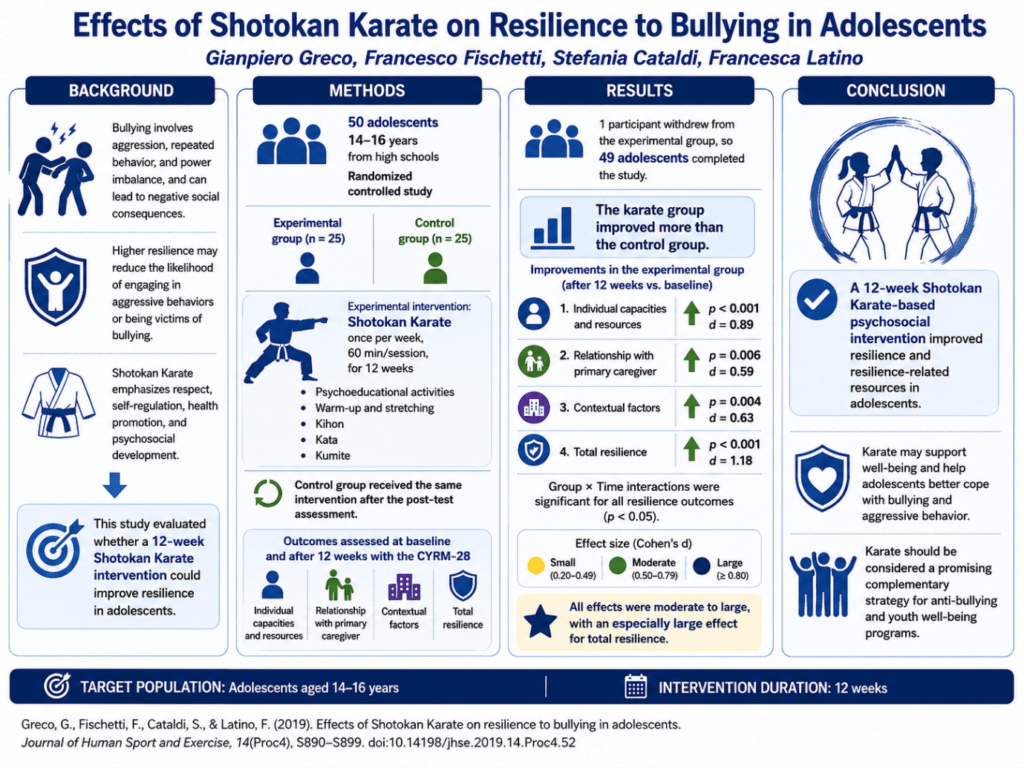
Key Findings
- Adolescents engaged in consistent karate practice exhibit significantly greater psychological resilience.
- They showed significant improvements in resilience-related resources, including individual capacities and resources, relationship with primary caregiver, contextual factors, and total resilience.
- These resilience-related resources may help adolescents better cope with bullying and social challenges.
The structured nature of karate-its rituals, hierarchical progression, and focus on personal development-fosters an environment that builds self-confidence and emotional stability. Additionally, the physical training instils a sense of empowerment. Mastery of techniques, bodily control, and advancement through ranks contribute to a heightened sense of achievement and self-worth. This physical confidence often translates into social confidence, reducing vulnerability to bullying and improving responses when confronted.
Educational Implications
The paper also critiques the broader educational system for its reliance on impersonal, reactive strategies. It advocates for the integration of psycho-physical programs like martial arts into school curricula or extracurricular activities. Such programs not only address the symptoms of bullying but also equip adolescents with the internal resources needed to thrive in socially challenging environments.
Conclusion
Shotokan Karate emerges as a compelling tool for fostering resilience in adolescents. The study calls for a paradigm shift in how schools and communities support youth-favouring holistic approaches that blend physical discipline with psychological growth. By doing so, it challenges conventional methods and opens the door to more effective strategies for combating bullying and promoting adolescent well-being.